
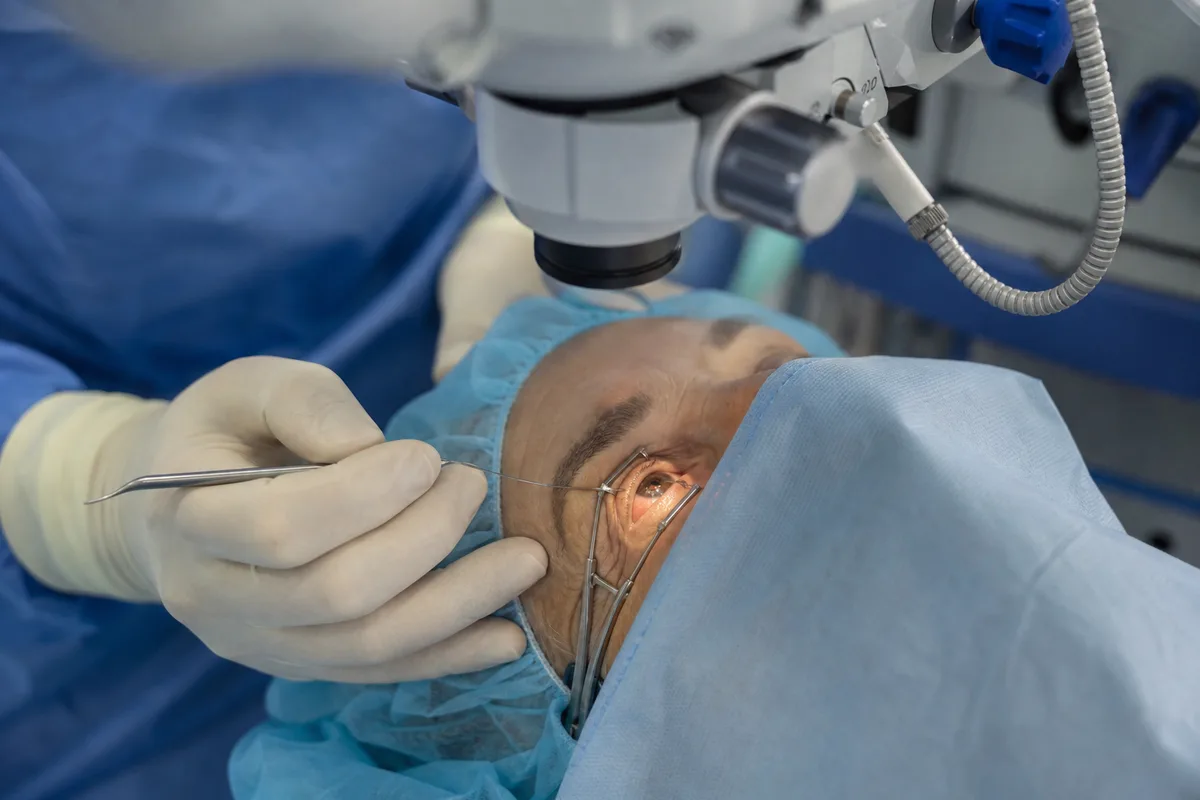
Understanding Cataracts
A cataract is a clouding of the eye's naturally clear lens, and it's one of the most common causes of blurred vision as we get older. As the lens clouds, colors can look faded, night driving can become more difficult due to glare, and reading or recognizing faces may take more effort than it used to. Cataract surgery, performed on the ophthalmology side of Ace Medical Care, removes the clouded lens and replaces it with a clear artificial intraocular lens (IOL).
Signs You May Have a Cataract
- Blurry, cloudy, or dim vision
- Increased sensitivity to glare, especially from headlights at night
- Colors appearing faded or yellowed
- Frequent changes in your eyeglass prescription
- Difficulty reading or doing close-up tasks even with glasses
Cataracts develop gradually, and a comprehensive eye exam is the best way to confirm whether a cataract is contributing to changes in your vision.
Types of Cataract Surgery We Offer
Standard Cataract Surgery
The clouded natural lens is removed and replaced with an artificial IOL to restore clear vision. This is one of the most commonly performed surgical procedures in ophthalmology.
Laser-Assisted Cataract Surgery
This approach uses laser technology to assist with certain steps of the procedure, offering an additional level of precision for candidates who are well suited to it. Whether laser assistance is appropriate for you is something your surgeon will discuss based on your specific eye anatomy.
Premium Intraocular Lens (IOL) Options
Beyond standard monofocal lenses, several premium IOL options may be available depending on your eyes and visual goals:
- Toric IOLs: Designed to help correct astigmatism at the same time as cataract surgery.
- Multifocal IOLs: Designed to provide a range of vision at multiple distances, which may reduce dependence on glasses for some patients.
- Light-adjustable lenses: A newer lens technology that allows your prescription to be fine-tuned after surgery using a special light treatment, once your eye has healed.
Not every lens option is right for every patient. Our ophthalmology team will review your eye health, lifestyle, and visual goals with you to help determine which option best fits your situation.
What to Expect
- Evaluation: A thorough eye exam and measurements to plan your surgery and discuss lens options.
- The procedure: Cataract surgery is typically performed as an outpatient procedure under local anesthesia.
- Recovery: Most patients are given eye drops and follow-up instructions to support healing, along with a schedule of post-operative visits to monitor progress.
Your surgeon will walk you through exactly what to expect for your specific case, including timeline and any precautions during recovery.
Is It Time to Talk About Cataract Surgery?
If cloudy or blurry vision is starting to interfere with reading, driving, or daily activities, it's worth having your eyes evaluated. Not every cataract needs surgery right away — our team will help you understand your options and the right timing for your situation.
Ready to Book Your Appointment?
Contact Ace Medical Care to schedule a cataract evaluation with our ophthalmology team.