
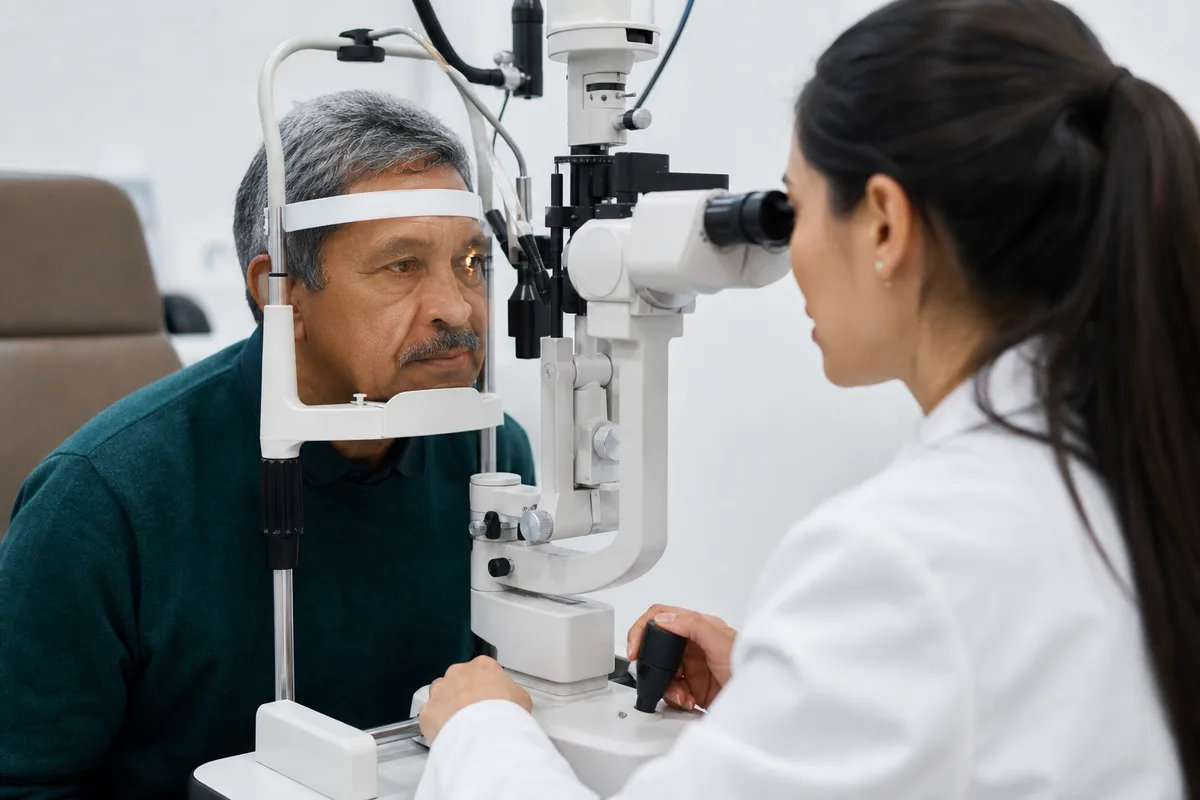
Why Diabetic Eye Exams Matter
Diabetes doesn't just affect blood sugar — it can quietly change the blood vessels inside your eyes long before you notice any difference in your vision. A diabetic eye exam is a comprehensive, dilated evaluation designed specifically to catch those changes early, when they're most treatable. At Ace Medical Care, our optometry and ophthalmology teams work together so that any signs of diabetic eye disease are caught, monitored, and, when necessary, referred for treatment without delay.
What Is a Diabetic Eye Exam?
A diabetic eye exam goes beyond a standard vision check. It's a dilated examination that allows your provider to see deep inside the eye — the retina, the optic nerve, and the blood vessels that nourish them — where diabetes-related damage first appears.
What the Exam Includes
- Visual Acuity Testing: Measuring how clearly you see at various distances.
- Dilated Retinal Exam: Eye drops widen the pupil so your provider can examine the retina and optic nerve directly.
- Retinal Imaging: Photographs or scans of the back of the eye to document its current condition and track changes over time.
- Intraocular Pressure Check: Diabetes can raise the risk of glaucoma, so eye pressure is measured as part of the visit.
- Discussion of Findings: Your provider reviews what they see and outlines any follow-up care needed.
How Diabetes Affects the Eyes
Diabetic Retinopathy
High blood sugar can damage the tiny blood vessels in the retina, causing them to leak, swell, or grow abnormally. In its early stages, diabetic retinopathy usually has no symptoms — which is exactly why regular dilated exams are so important.
Diabetic Macular Edema
Fluid can build up in the macula, the part of the retina responsible for sharp, central vision, leading to blurring that can progress if left unaddressed.
Increased Risk of Other Eye Conditions
People with diabetes also face a higher risk of cataracts and glaucoma, both of which your provider will screen for during a comprehensive diabetic eye exam.
How Often Should You Be Screened?
Most people with diabetes are advised to have a dilated eye exam at least once a year, though your provider may recommend more frequent visits depending on how long you've had diabetes, how well your blood sugar has been managed, and whether any changes have already been detected. Because early diabetic eye disease often has no warning signs, sticking to your recommended schedule — even when your vision feels fine — is one of the most effective ways to protect your sight.
What to Expect During Your Visit
After your vision and eye pressure are checked, your provider will place dilating drops in your eyes. These take about 20–30 minutes to fully take effect. Once dilated, your pupils let in more light and stay enlarged for several hours, so your eyes may feel more light-sensitive and your near vision may be temporarily blurred. We recommend bringing sunglasses and, if possible, arranging a ride, since some patients prefer not to drive immediately afterward.
During the exam itself, your provider will carefully examine the retina and document what they see. If any signs of diabetic retinopathy or other changes are found, they'll explain the findings clearly and discuss next steps, which may include more frequent monitoring or a referral for further evaluation.
Working With Your Care Team
Because eye health and overall diabetes management go hand in hand, it's helpful to keep your eye care provider informed about your blood sugar control and to keep your primary care physician informed about any findings from your eye exam. At Ace Medical Care, our optometry and ophthalmology providers coordinate care so that if a condition like diabetic retinopathy is identified, you can move smoothly from screening to management within the same practice.
Ready to Book Your Appointment?
If you have diabetes and haven't had a dilated eye exam in the past year, now is a good time to schedule one. Contact Ace Medical Care to set up your diabetic eye exam and take a proactive step toward protecting your vision.